

$48.00
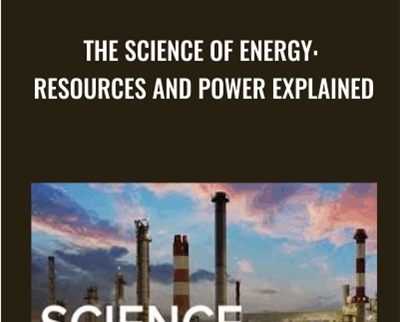
In the 24 lectures of The Science of Energy: Resources and Power Explained, award-winning professor and expert geophysicist Michael E. Wysession of Washington University in St. Louis presents an unbiased investigation into the energy sources that power our world. Vividly illustrated with animations, 3-D graphics, graphs, in-studio demonstrations, and other visuals that make scientific and mathematical concepts approachable and understandable, The Science of Energy is a marvelous window into the inner workings of energy that will keep you constantly engaged.
You are currently accessing the institutional-grade blueprint for <b>The Science of Energy: Resources and Power Explained – Michael E. Wysession</b>. Instant digital deployment and lifetime encrypted access are guaranteed immediately upon transaction clearance.
Energy is, without a doubt, the very foundation of the universe. It’s the engine that powers life and fuels the evolution of human civilization
Yet for all its importance, what energy really is and how it works remains a mystery to most non-scientists. For example:
- Where does most of our energy come from, and how is it sourced?
- How do energy technologies, both primitive and cutting-edge, generate power?
- How do we store energy—and will there be enough to meet our future needs?
- What are the pros and cons behind the forms of energy currently available to us?
- How might we harness potential future energy sources such as earthquakes and supervolcanoes?
All too often, the answers to questions like these are bogged down in polemics and controversy. Imagine, then, how these and other questions could be discussed from a purely factual, scientific perspective. The truth is, to better put into perspective the various issues surrounding energy in the 21st century, you need to understand the essential science behind how energy works. And you need a reliable source whose focus is on giving you the facts you need to form your own educated opinions.
In the 24 lectures of The Science of Energy: Resources and Power Explained, award-winning professor and expert geophysicist Michael E. Wysession of Washington University in St. Louis presents an unbiased investigation into the energy sources that power our world. Vividly illustrated with animations, 3-D graphics, graphs, in-studio demonstrations, and other visuals that make scientific and mathematical concepts approachable and understandable, The Science of Energy is a marvelous window into the inner workings of energy that will keep you constantly engaged.
Professor Wysession walks you through a wide portfolio of renewable and non-renewable energy sources, including coal, oil, natural gas, solar, wind, geothermal, and nuclear fission. You’ll examine how these sources work, the engineering marvels that adapt them to human needs, the economic and environmental consequences of using them, and more. Whatever exciting, rapid changes await us in the coming decades (from food production to public transportation to industrial manufacturing), they’ll most certainly require lots of power. For this reason and many more, this course imparts essential information for any well-informed citizen of the world—whether you’re powering a major city or simply turning on the bathroom light.
Get The Science of Energy: Resources and Power Explained – Michael E. Wysession, Only Price $52
Evoking Energy from Every Element
The Science of Energy provides you with a thorough, understandable introduction to the fundamentals of different energy sources that we often take for granted. With the same attention to detail and accessibility that makes Professor Wysession one of The Great Courses’ most popular science instructors, his lectures offer a fascinating way to grasp the essentials of the world’s varied energy sources.
- Fossil fuels: Coal and petroleum are responsible for the remarkable industrial transformation of human culture over the past few centuries. A sedimentary rock, coal develops in stages with progressively more carbon—which determines how “dirty” or “clean” the coal burns. Petroleum, on the other hand, derives from the fossils of once-living ocean organisms (mostly one-celled plankton) tens of millions of years old.
- Hydroelectricity: Hydropower provides an estimated 1/6 of the world’s total electricity. The basic principle behind how it works is that, as water falls down through the power plant, its gravitational potential energy converts into the kinetic energy of the motion of the water, which turns the turbines of a generator.
- Nuclear energy: When most people talk about nuclear power, they’re referring to nuclear fission, or the splitting of large atoms to release energy. Relative to human time scales, nuclear energy can provide nearly unlimited power by processing ocean water for available uranium (only a small amount of which is needed to generate electricity).
- Solar energy: Solar energy’s main engineering marvels are photovoltaic solar panels that convert sunlight directly into electricity using semiconducting materials that exhibit a photoelectric effect. While solar energy is constantly renewable, it’s also very geographically dependent; for example, solar power is less effective in a place like Seattle, where it rains a lot.
- Wind energy: People have been harnessing the power of wind for thousands of years with technologies like sailing ships and windmills. But as civilizations have advanced, so too have the technologies to transform wind into a reliable (and renewable) power source. Wind turbines, for example, work like plane propellers in reverse: the natural wind blows through the rotors and then generates a force that powers the engine.
Learn How Energy Shapes Our Lives
“Humans consume an enormous amount of energy,” says Professor Wysession, “and countless decisions are made every day—locally, nationally, internationally—to make sure our supply of energy remains available, affordable, and uninterrupted.” As you explore the science of energy sources, you’ll also delve into their impact on everything from economic trade agreements to geographical dependency to environmental pollution. The goal of these lectures is not to choose a particular side in the energy debate; rather, it’s to illustrate just how far-reaching this science is in our lives. Much of the second half of this course is devoted to probing fascinating questions about energy’s role and influence in a range of subjects, from natural science and sociology to nuclear physics and meteorology.
- Energy and technology: How can scientists and engineers tap into the energy potential of natural disasters? What technological methods help us remove many of the pollutants that occur during combustion? What intricate technologies are required to keep a nuclear plant functioning safely?
- Energy and economics: What hidden factors are responsible for the rise and fall of oil prices around the world? Which are more cost-effective: electric or gas-powered cars? How do government incentives and disincentives impact various energy industries?
- Energy and geography: Why are particular regions of the planet more enriched with petroleum sources? What factors make the world’s coastlines optimal for building wind turbines to harvest wind energy? How does heavy cloud coverage influence the effectiveness of solar panels?
- Energy and the environment: How does the process of fracking for oil lead to potentially dangerous earthquakes? What are the best ways to store nuclear waste, and what exactly happens during a nuclear plant meltdown? Just how serious is our current era of global warming?
Get The Science of Energy: Resources and Power Explained – Michael E. Wysession, Only Price $52
Get a Practical Education in Energy Science
An acclaimed teacher with a devotion to geoscience education, Professor Wysession is passionate about sharing this vital information with a broad audience. He brings to these lectures a fascination with just how intricate the universe is, and his dedication to sharing that fascination makes this course accessible and engaging for lifelong learners of all backgrounds. Whether he’s explaining the basics of the water cycle or the potential for harvesting energy from supervolcanoes, his work here is designed to help you better think about (and talk about) how we power our lives.
Over millennia, our ability to harness varied forms of energy has driven the ascending progress of our cultures, economies, and governments. The extraordinary world-spanning civilizations that we have built rely utterly on a vast, dependable, and lasting supply of energy. The choices we make—as consumers, as contributors, as citizens—have profound consequences for how the world will continue to develop. The Science of Energy gives you the clear and objective facts you need to choose well.
24 lectures
| Average 33 minutes each
- Energy and Human Civilization
- Energy: Forms and Conversion for Use
- Heat: The Transfer and Flow of Energy
- Electricity: Ultimate Energy Converter
- Chemical Energy, Biomass, and Photosynthesis
- Coal: Convenient, Energy-Dense Fuel
- Petroleum: Chemistry, Retrieval, and Use
- New Petroleum Directions
- Fossil Fuel Energy: Issues and Concerns
- Understanding Carbon Dioxide
- The Science of Nuclear Power
- The Nuclear Fission Fuel Cycle
- Sunlight: Inexhaustible Energy Source
- Solar Power and Electricity
- Wind Power and Electricity
- Hydroelectric Power: Electricity from Water
- Biofuels: Biodiesel and Ethanol
- Geothermal Energy
- Energy Storage Technologies
- Energy Needs for Transportation
- Energy Efficiency: Technologies and Trends
- Energy Sources: Economics and Politics
- Probable and Possible Future Energy Sources
- Energy Trends: Planning for the Near Future
Get The Science of Energy: Resources and Power Explained – Michael E. Wysession, Only Price $52
Tag: The Science of Energy: Resources and Power Explained – Michael E. Wysession Review. The Science of Energy: Resources and Power Explained – Michael E. Wysession download. The Science of Energy: Resources and Power Explained – Michael E. Wysession discount.
Trading foreign exchange, cryptocurrencies, and algorithmic assets on margin carries a high level of risk and may not be suitable for all investors. Past performance of any trading system or quantitative blueprint does not guarantee future results.<br><br><b>Asset Classification:</b>
Related products

Uncategorized
Uncategorized
Uncategorized
Uncategorized
Optimizing Compliance and Maximizing Revenue for Ophthalmology and Optometry – Jeffrey P. Restuccio
Uncategorized
Uncategorized
Managing Geriatric Behaviors: Wandering, Aggression, Malnutrition and More – Steven Atkinson
Uncategorized